Tokai · Cape Town

Blinds for the forest view every Tokai lounge was built to frame — without the glare that slips in past the tree line.

Made-to-measure blinds, motorised shading and family-safe fittings for Tokai’s forest-edge homes — fitted by a consultant who already knows which rooms in this suburb run darker than the rest.

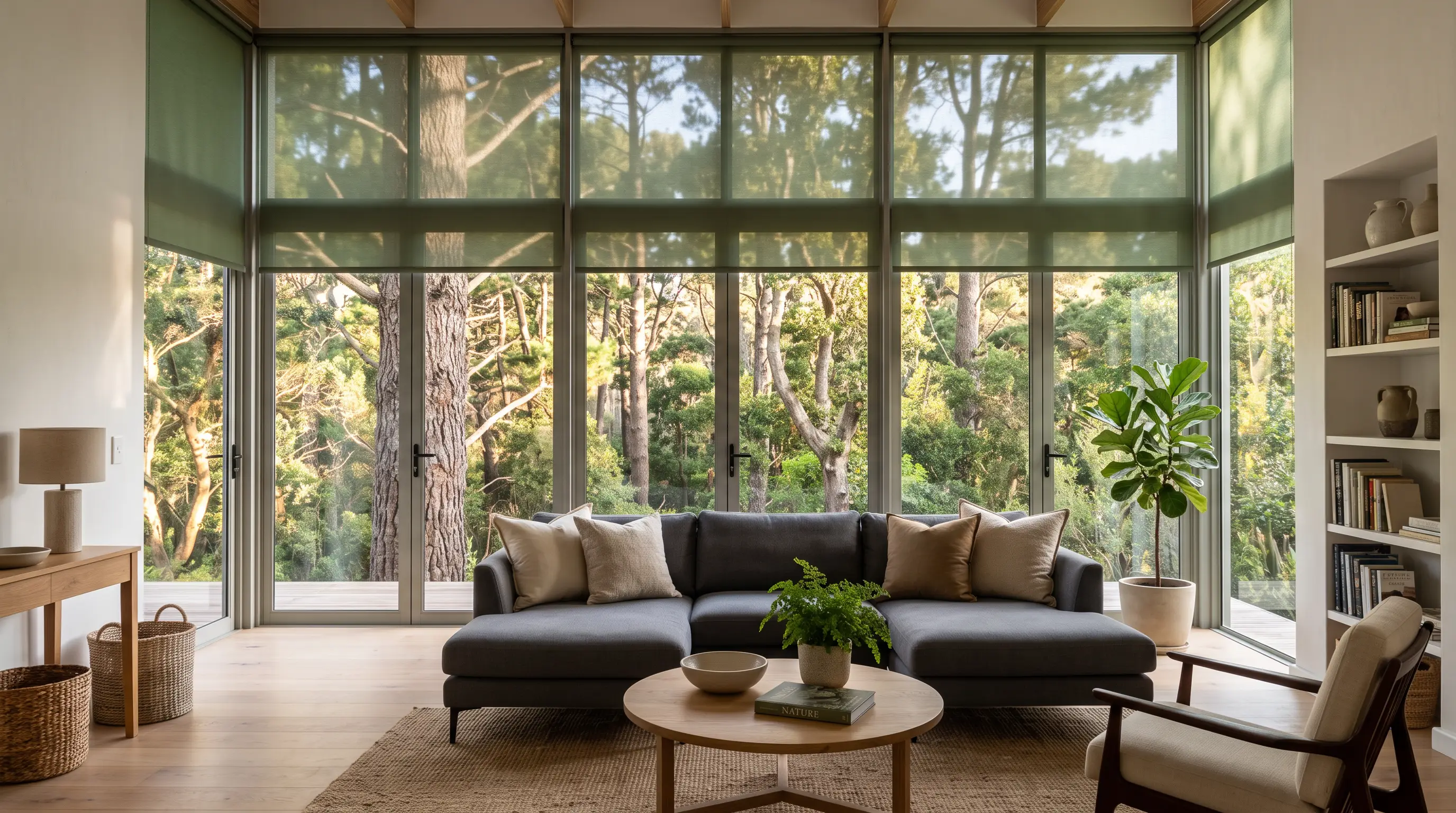
Fern-green sunscreen roller blinds partly lowered across tall forest-facing windows in a Tokai family living room, Cape Town
A Tokai lounge, forest side
Free in-home measure & written quote
Child- and pet-safe as standard
Specified for filtered forest light, not open sun
The range

Everything a forest-edge Tokai home actually needs

The room backing onto the pines rarely wants the same spec as the gable that catches the afternoon sun. So the range reads as twelve short chapters rather than a wall of tiles — what each product is for, and where in a forest-edge house it earns its place. All of it is made to measure, per window, and confirmed at the free measure.

Inside · the everyday window

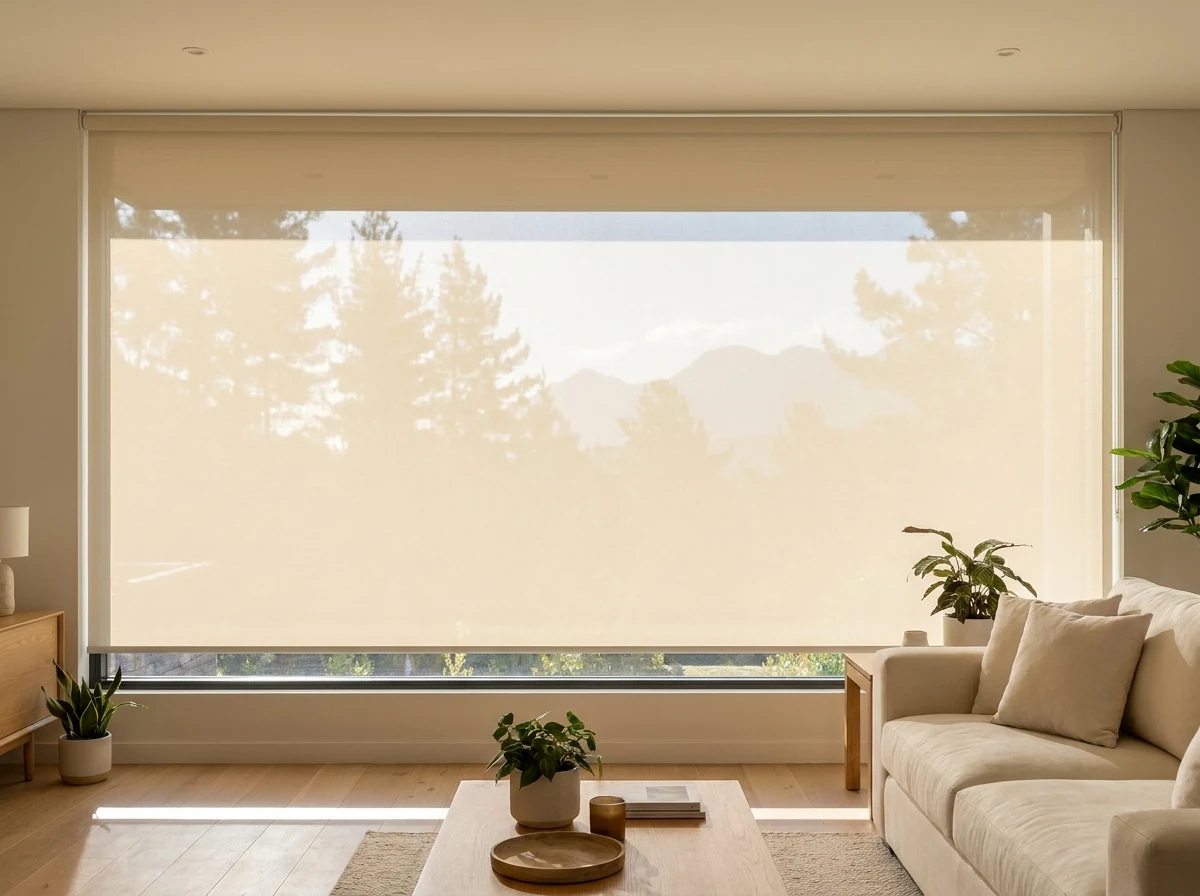
Roller blinds

Candlelight-cream sunscreen roller blind lowered across a wide lounge window in a Tokai family home, pine trunks legible through the mesh

Sunscreen for the sunnier gable ends, blockout for the bedrooms — the everyday answer for most Tokai windows.

Openness factor is the decision that actually matters on this side of the suburb. A more open sunscreen mesh keeps the forest readable while it takes the hard edge off the glare; a tighter weave cuts more heat but flattens the same window to grey by late afternoon. We bring both to the measure and hold them up against your own glass.

Explore roller blinds

Inside · children’s rooms

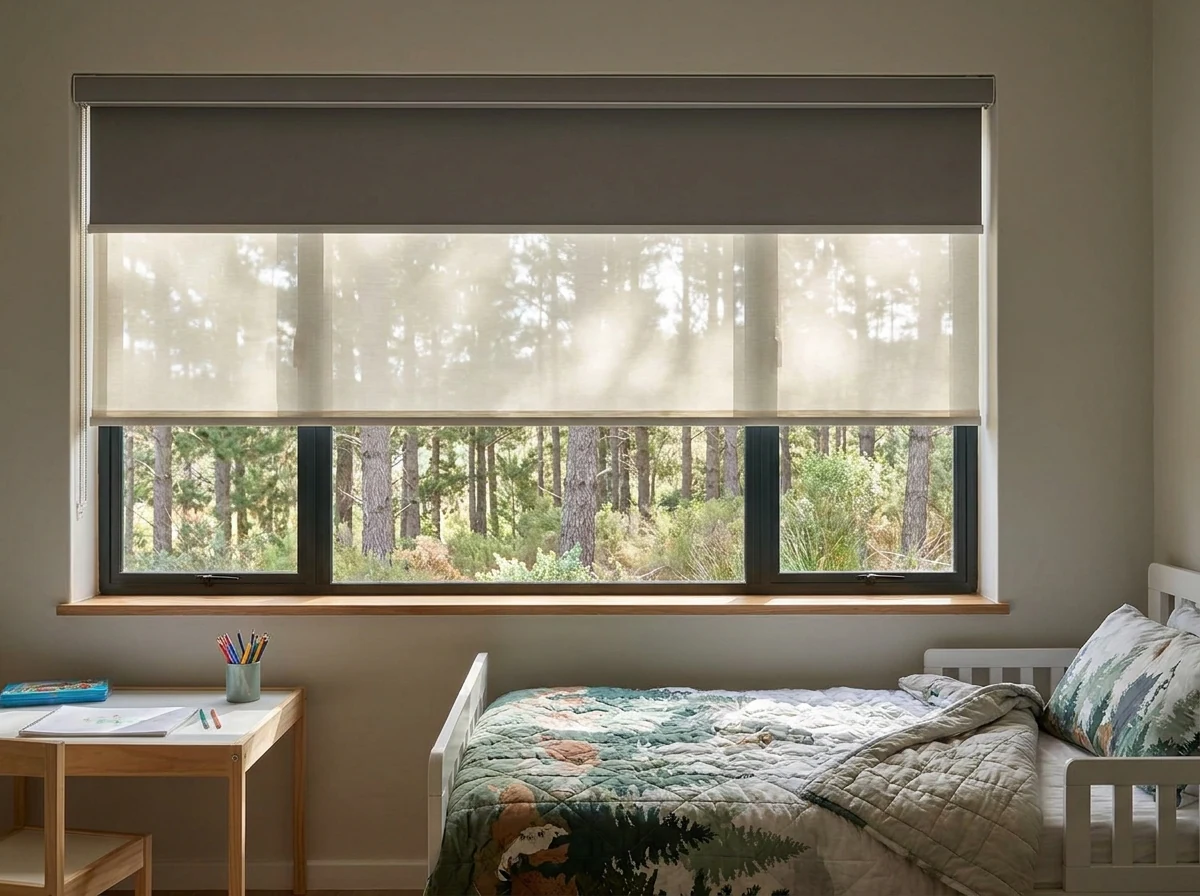
Day/night blinds

Day and night double roller blind with iron-grey and cream bands half-aligned in a Tokai child’s bedroom facing the pine plantation

Sheer by day for the kids’ rooms that face the forest, solid by night once the pine shadows turn to dark.

Two fabric bands run on one tube, so the same blind moves from filtered to shut without swapping anything out. That suits a room asked to do homework light at three and sleep-dark at seven — which, in a house on the plantation boundary, is most of the children’s wing.

Ask about day/night blinds

Inside · kitchens and wet rooms

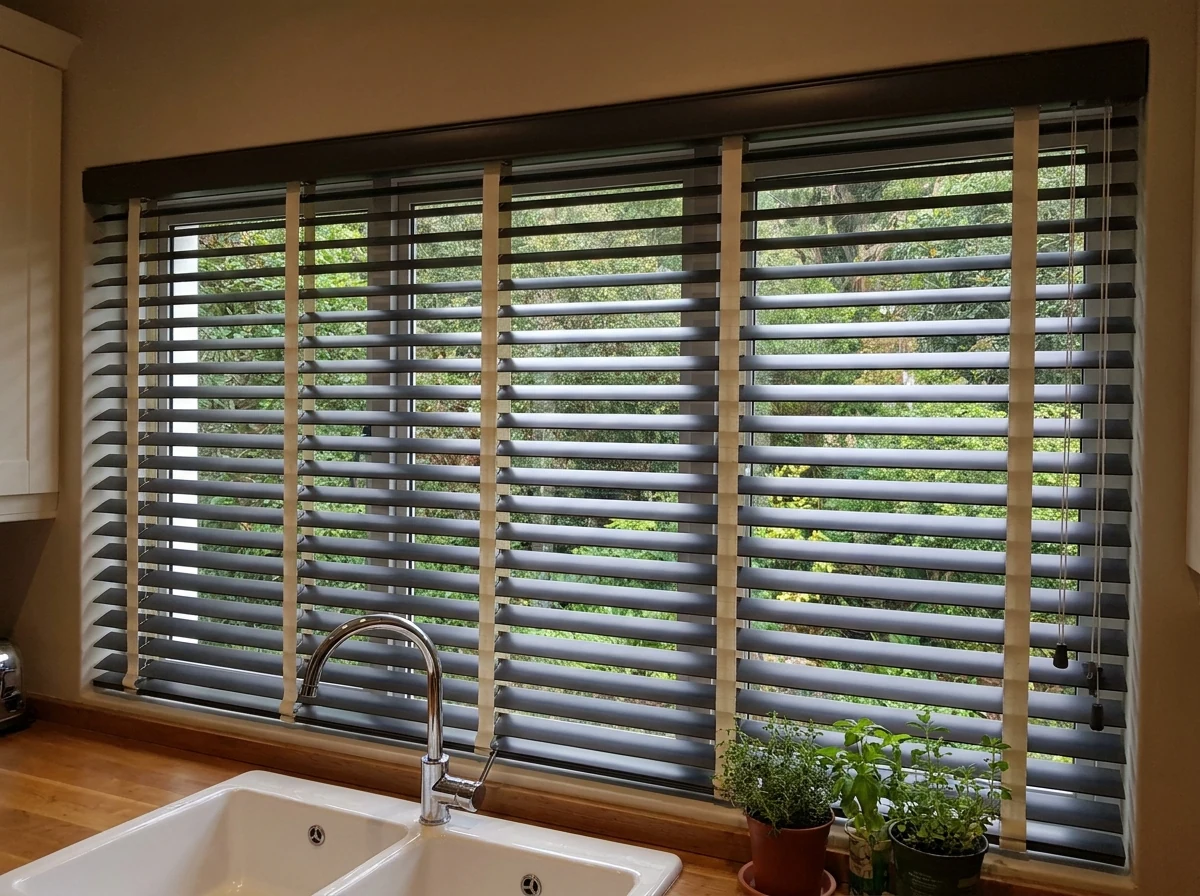
Venetian blinds

Iron-grey aluminium venetian slats tilted open above a double kitchen sink in a Tokai home, herb pots on the sill and forest green beyond

Tilt the slats to steer dappled forest light exactly where you want it, hour by hour — the whole range from wide open to closed down sits in one turn of the wand.

Aluminium wipes down, shrugs off steam and does not swell, which is why we lean on it for a kitchen or bathroom on the shaded, slower-drying side of a forest-edge house. Timber slats we keep for the drier, sunnier rooms, where the warmth of the grain earns its keep.

Explore venetian blinds

Inside · the cold side of the house

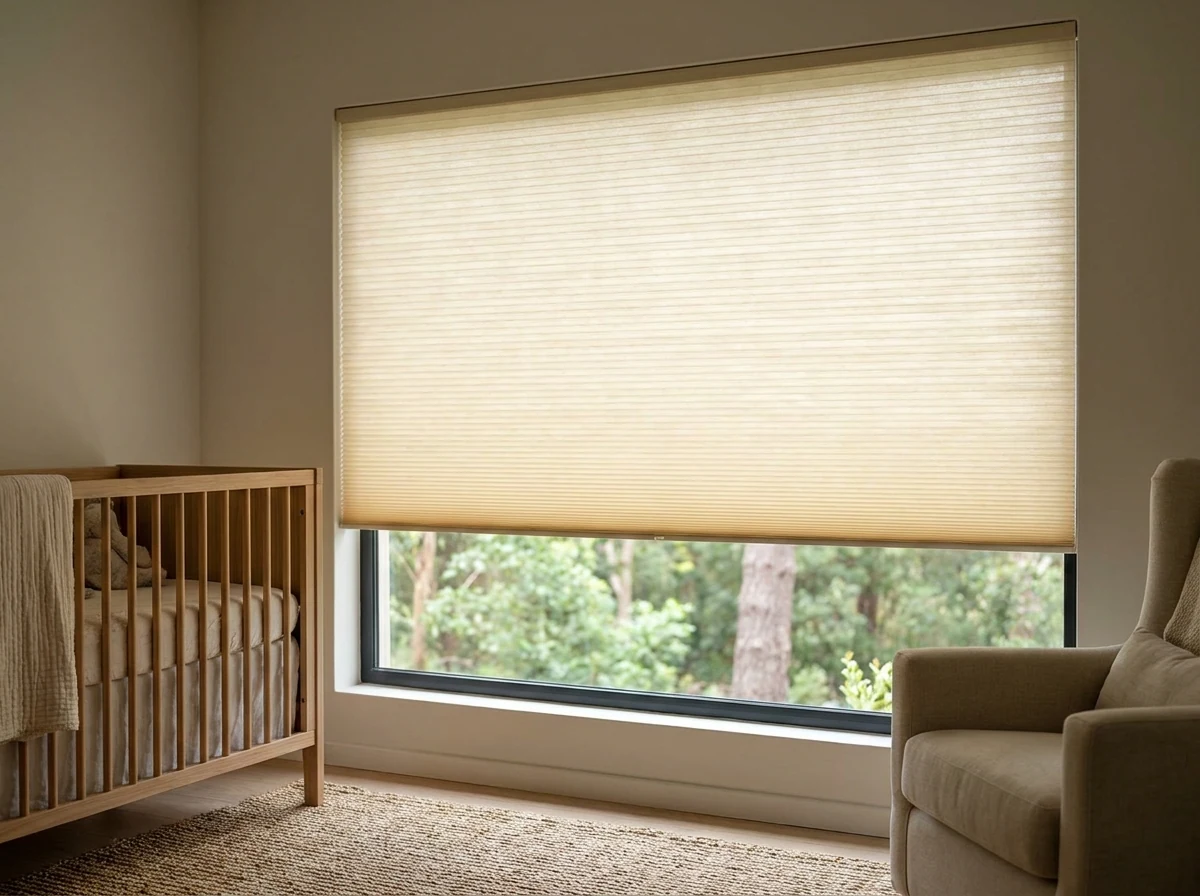
Cellular / honeycomb blinds

Pleated cellular honeycomb blind in candlelight cream fitted inside a nursery window reveal in a Tokai forest-edge home, cot alongside

An insulating air-cell buffer for the shaded, damp-prone side of the house that never quite dries out.

Each pleat holds a pocket of still air against the glass, which slows the heat leaking out of a room the sun never properly reaches. Those are the rooms that feel colder than the thermostat claims — usually the ones with pine trunks a few metres off the sill.

Explore cellular blinds

Inside · sliding doors

Vertical & panel blinds

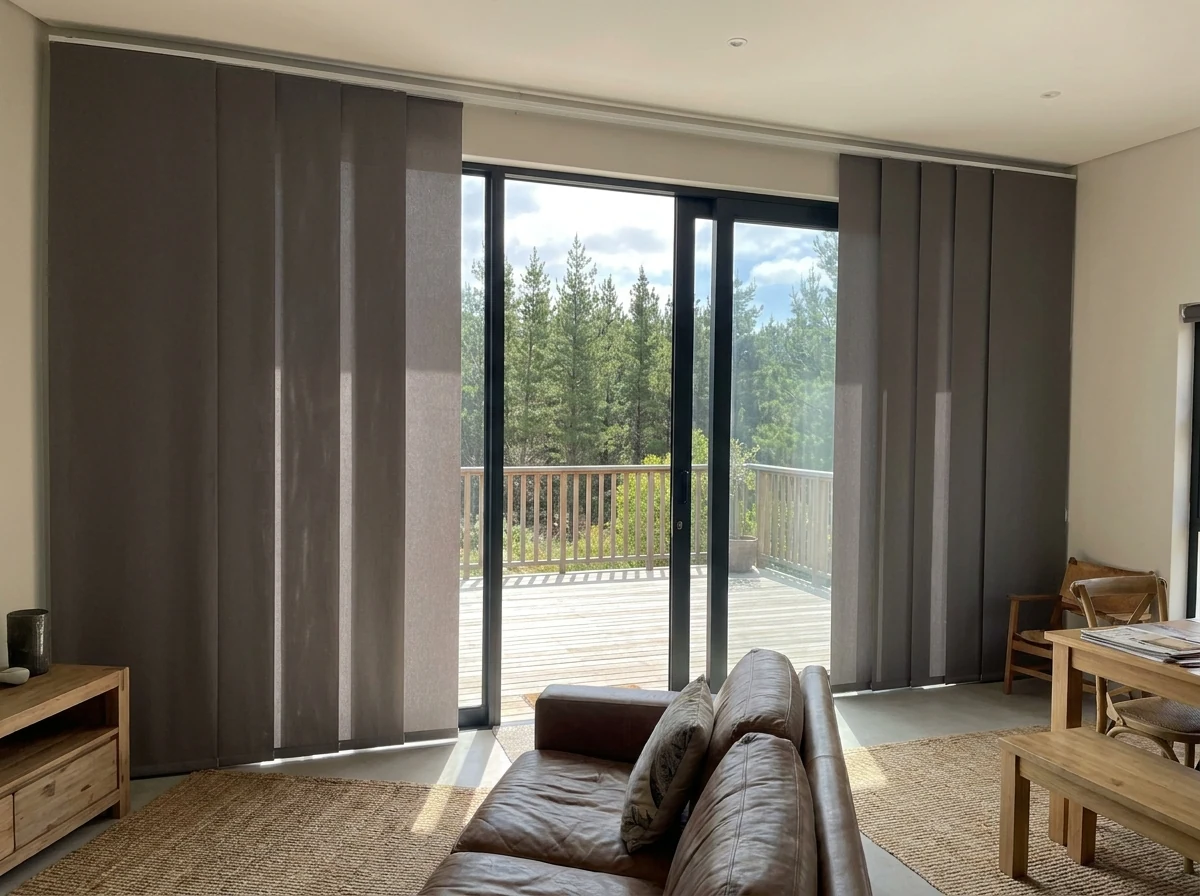
Iron-grey fabric panel blinds stacked partly open across a wide sliding door onto a timber deck in a Tokai family home

The practical answer for a wide sliding door onto the deck, without a folded curtain in the doorway.

Panels stack tight to one side and clear the track completely, so the doorway stays a doorway on the evenings everyone is carrying plates out to the braai. Vertical vanes do the same job on a narrower opening and turn edge-on when you want the light back.

Ask about panel blinds

Inside · architect-built rooms

Concealed & recessed blinds

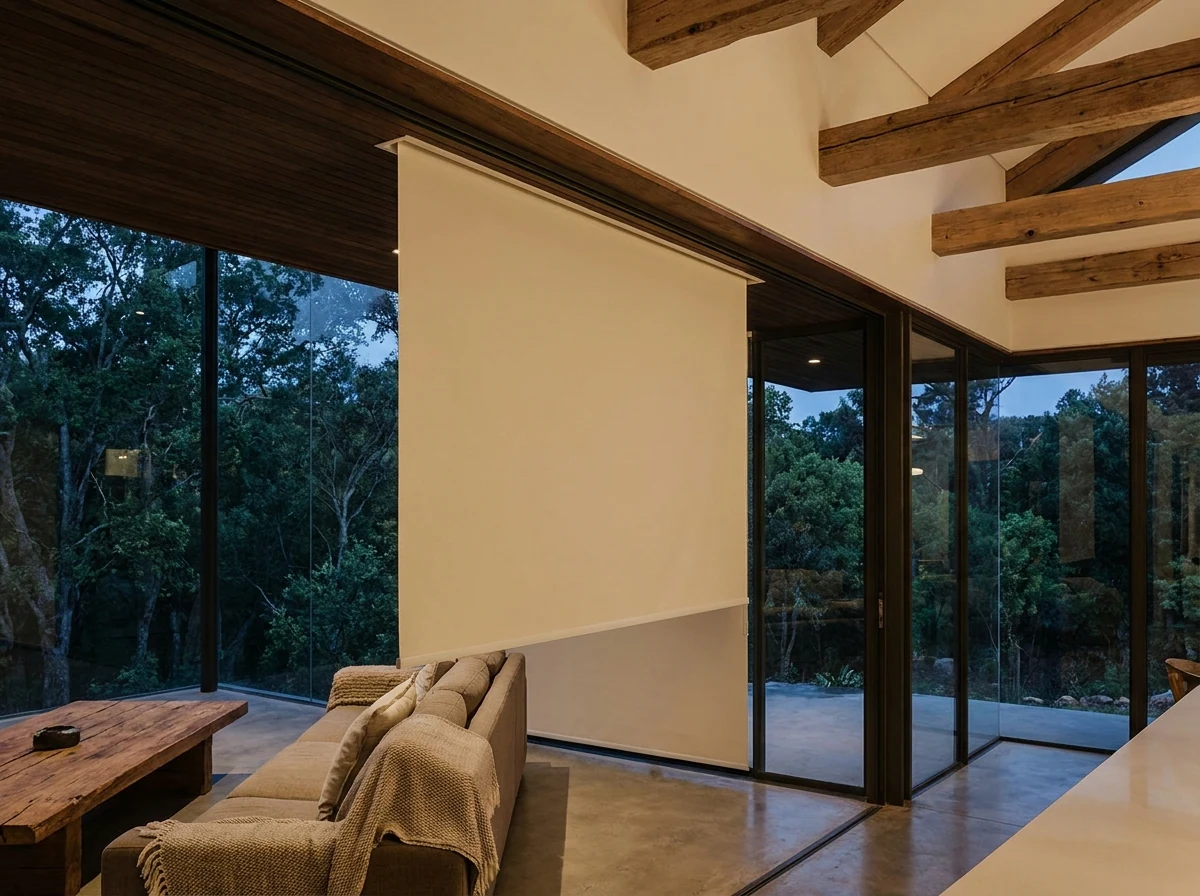
Blockout blind dropping from a slim ceiling recess across glazing in an architect-designed Tokai home with exposed timber roof beams

Fabric drops from a slim ceiling slot, so an architect-built Tokai home’s exposed beams stay the feature.

The neatest version of this is decided before the ceiling closes, while there is still room to plan a slot and a power point. Where the build is long finished, a shallow bulkhead can usually carry the same idea — we will say honestly at the measure whether your ceiling has the depth for it.

Ask about concealed blinds

Inside · roof glass and gables

Skylight & shaped-window blinds

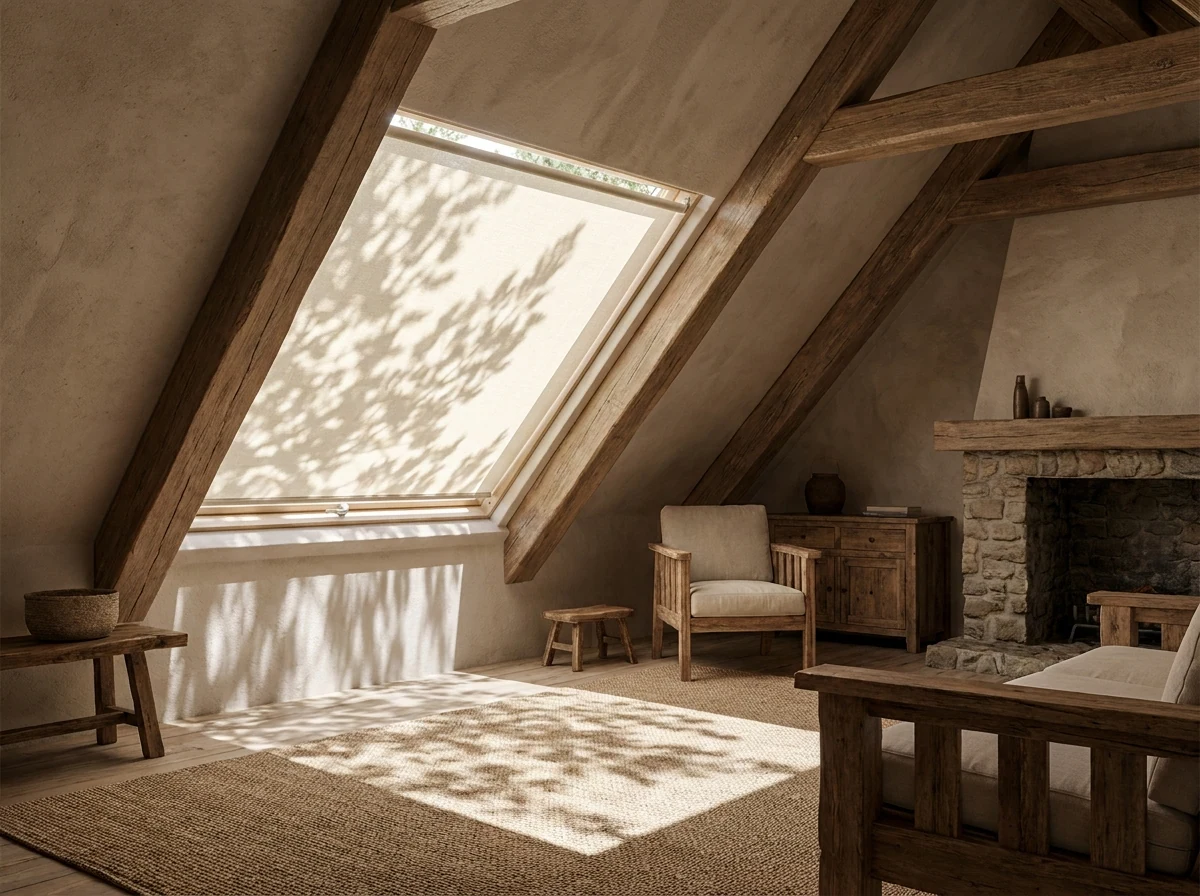
Tensioned cream fabric blind held flat against an angled skylight in a pitched, beamed Tokai roof room, dappled pine shadow on the floor

Tensioned to hold flat on the angle, for the gable and skylight glass a few forest-edge roofs carry.

Side channels keep the fabric under tension so it cannot sag away from sloped glass, and a shaped gable gets templated on site rather than guessed off a drawing. It is slower to quote than a rectangle, and worth it on the window that turns a loft into an oven by two in the afternoon.

Ask about skylight blinds

Inside · the glass you cannot reach

Motorised blinds & automation

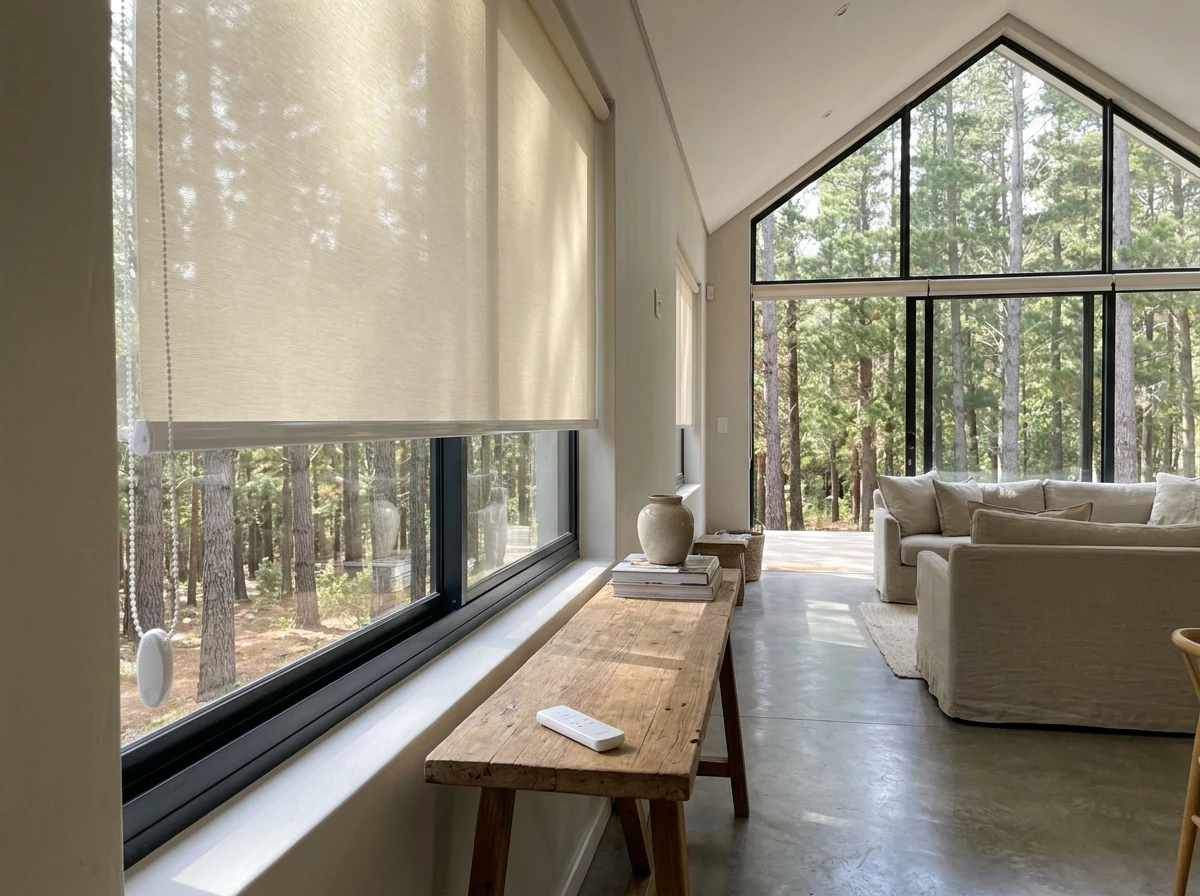
Motorised sunscreen roller blind part-way down a tall gable window in a Tokai living room, handset resting on a timber console

One remote for a tall gable window most ladders won’t reach, or a schedule that beats the afternoon sun to it.

Battery tubular motors suit a retrofit where nobody wants to open a finished wall; wired motors make more sense when a room is already stripped for work. Either way the cords and chains disappear, which is the quiet safety argument in a house with small children.

Ask about motorisation

Outside · the façade

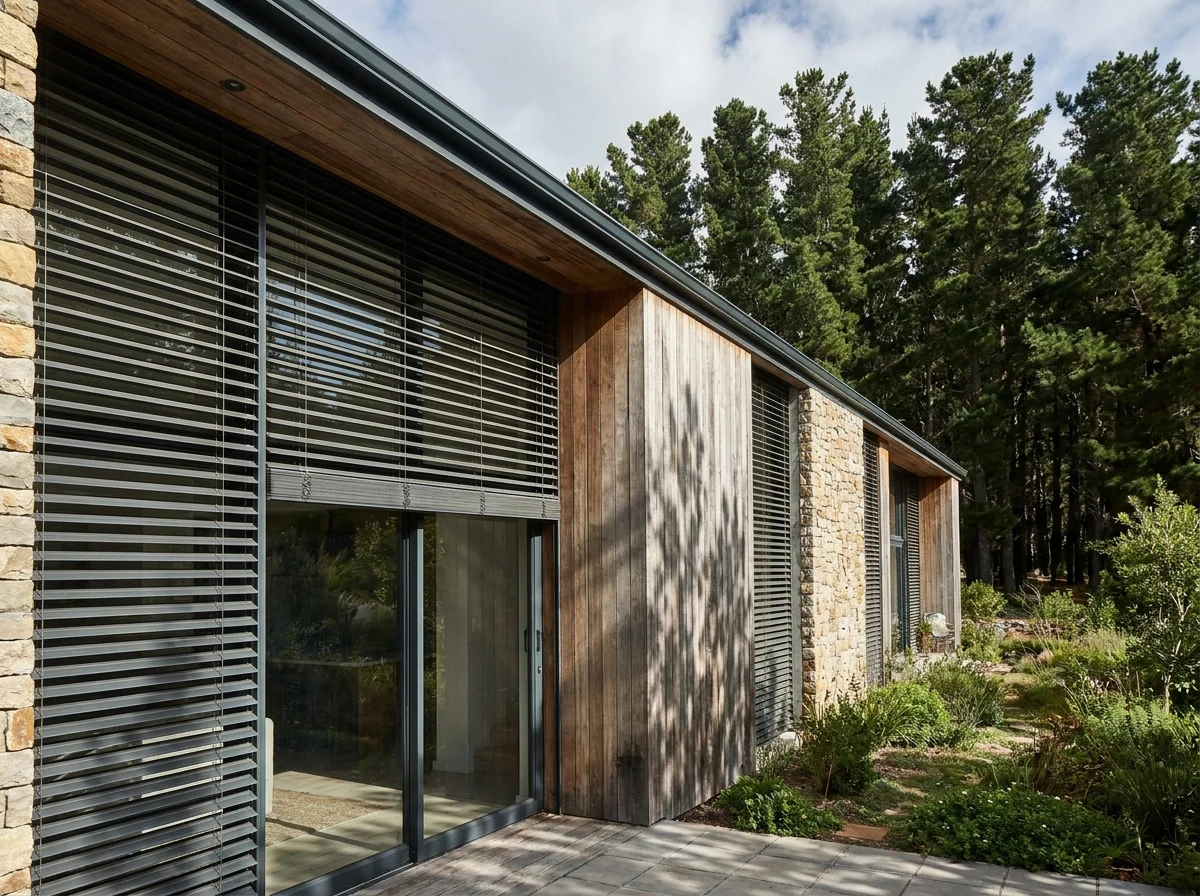
External venetians

External iron-grey aluminium venetian blinds mounted on the outside wall of a timber-clad Tokai home, pine plantation rising behind the roofline

Heat and glare stopped outside the glass, before the sun reaches a room already fighting forest damp — the premium end of the range, and what we lead with on an exposed Tokai façade.

Intercepting sun on the outside of the pane is simply more effective than catching it once it is already inside the room. The slats still tilt, so you keep the view and the daylight while the heat load stays out on the wall where it belongs.

Ask about external venetians

Outside · the harshest elevation

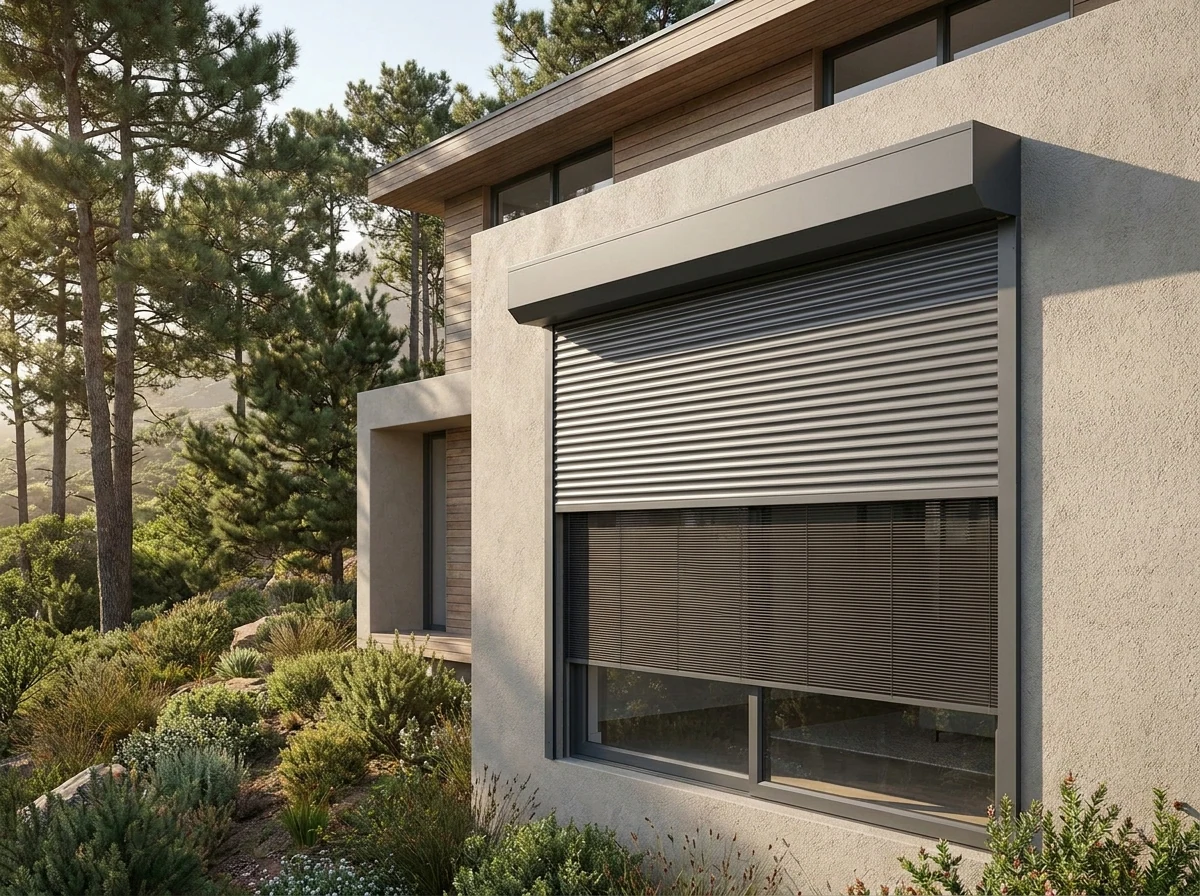
Roller shutters

Rigid iron-grey aluminium roller shutter part-lowered from its headbox outside a window on a rendered Tokai facade, pines on the slope behind

External shading for the gable that gets the day’s harshest light, rolling down on the outside of the glass.

Shading, not security or fire protection. Our roller shutters are built for sun, heat and glare control on the outside of the glass. They are not security-rated or fire-rated shutters — that’s a different product, quoted on request.

Ask about roller shutters

Outside · the deck

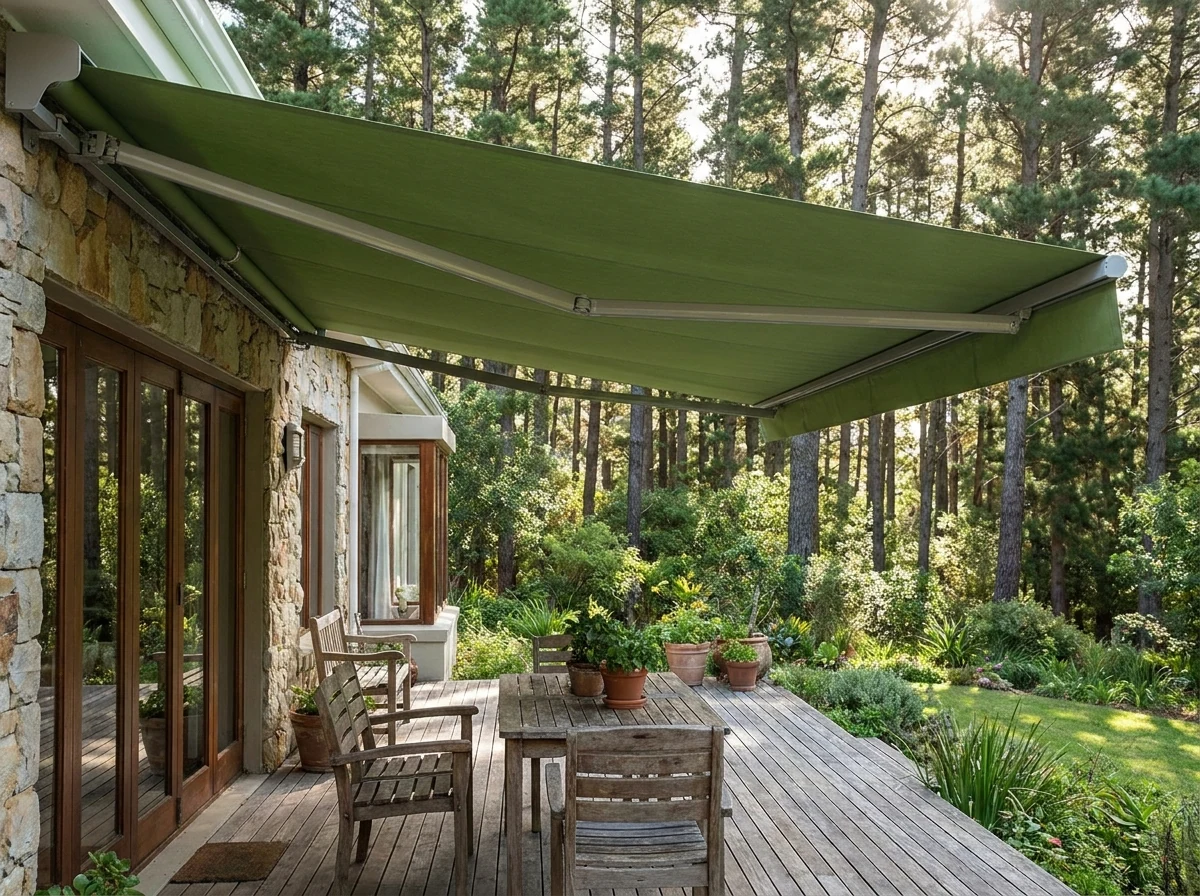
Folding-arm awnings

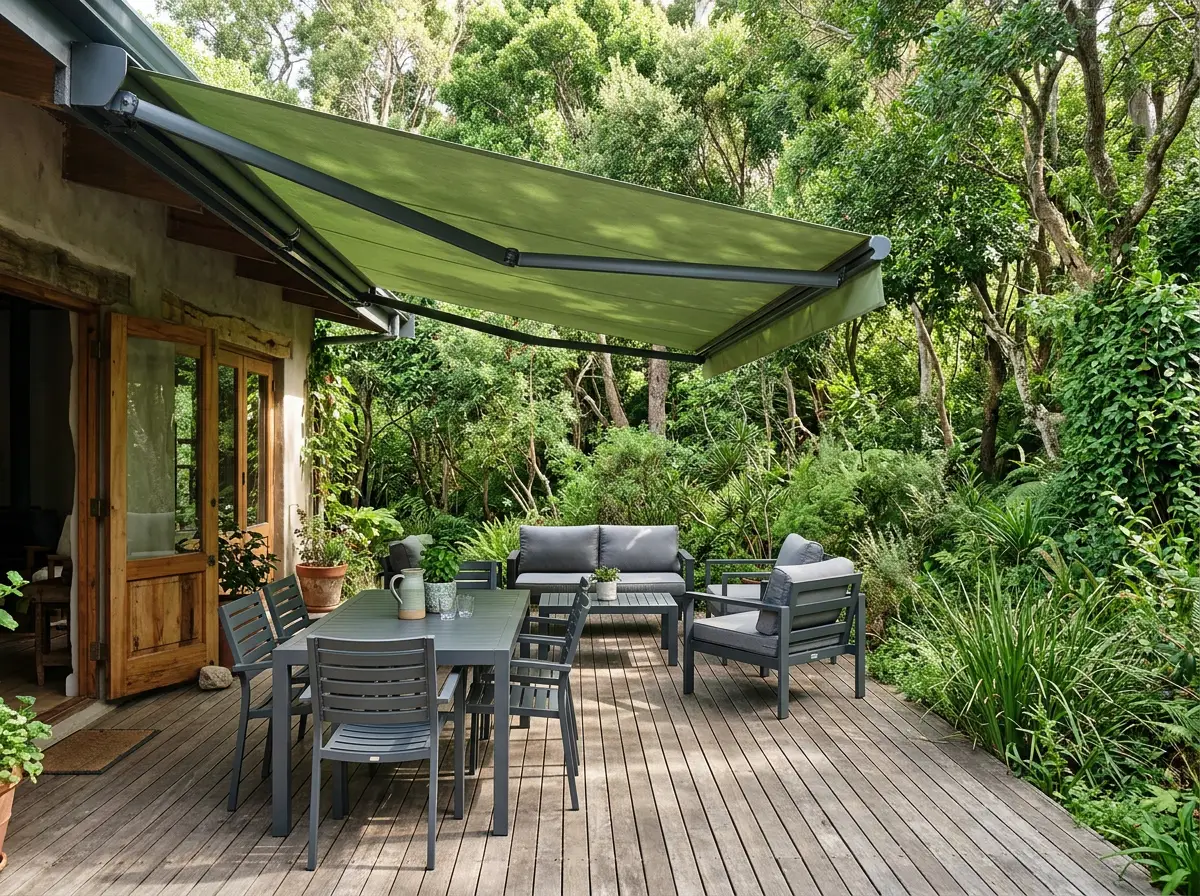
Fern-green folding-arm awning extended from the wall above a timber deck and lunch table at a Tokai home backing onto pine forest

Shade over the deck on the days the canopy doesn’t quite reach, retracting on a wind sensor when the pines start moving.

Projection and the fixing wall both get checked at the measure — a wide arm needs something solid behind the render to hold it, and the south-easter that runs down this side of the mountain is not a gentle wind. A wind sensor is the cheapest part of the job and the one that saves the rest of it.

Explore folding-arm awnings

Outside · the outdoor room

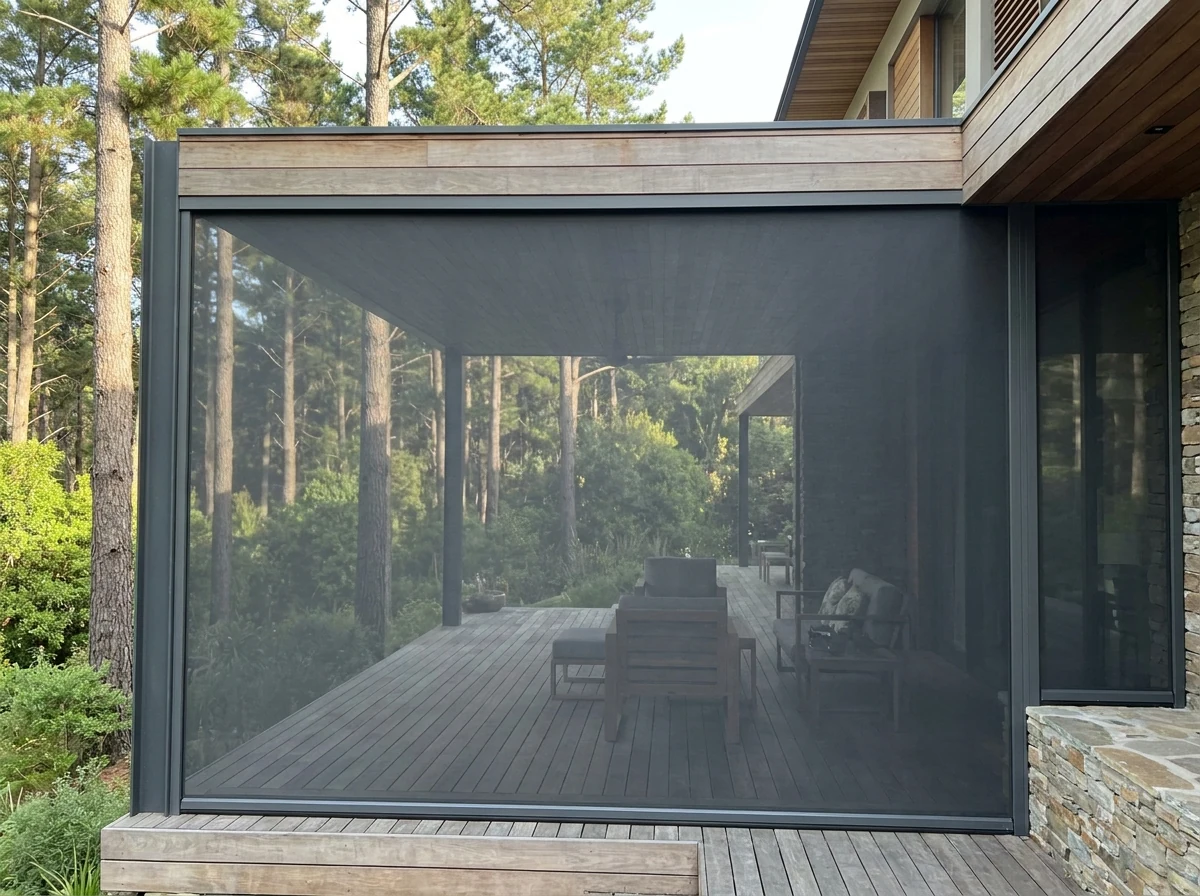
Zip screens

Taut iron-grey zip-track screen closing one side of a covered patio at a Tokai forest-edge home, pine trunks softened behind the mesh

Taut mesh that keeps pine needles and windblown debris out of an outdoor room, without ever billowing loose.

The fabric edge runs inside a side channel, so the screen stays flat in a gust instead of flapping against the furniture. That is the difference between a screen that gets lowered every evening and one that gets lowered once.

Ask about zip screens
In the home

Dressed for how a forest-edge Tokai home actually lives

Bedrooms that go quiet and dim early, decks that need shade on the days the canopy doesn’t reach, and windowsills that catch the light between the trunks — this is what made-to-measure, forest-specified shading is for.

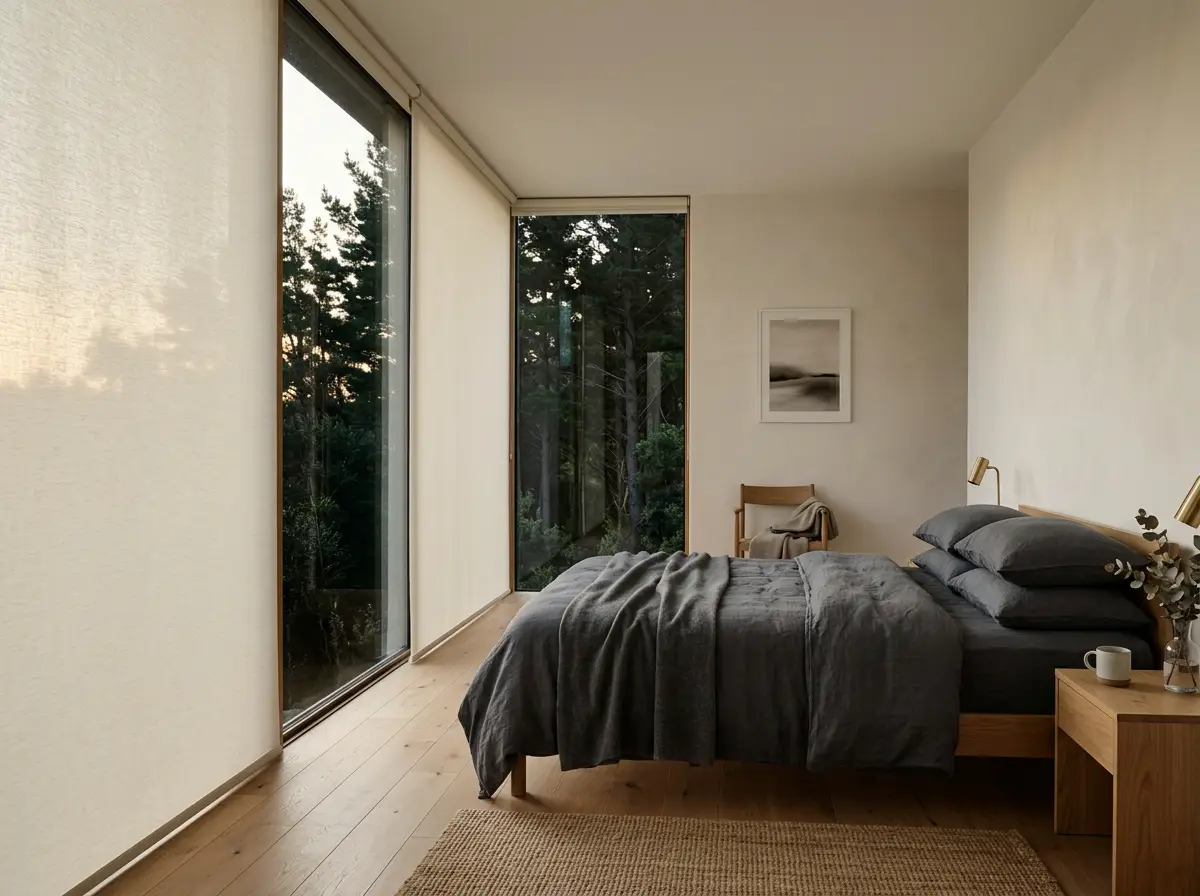
Candlelight-cream blockout roller blind lowered in a Tokai bedroom overlooking pine forest at dusk
A Tokai bedroom at dusk — the pines outside read almost black before the streetlights do.
Fern-green folding-arm awning extended over an outdoor dining and lounge deck at a Tokai home backing onto pine forest
Deck shade for the days the canopy doesn’t quite reach, retracting when the wind picks up.
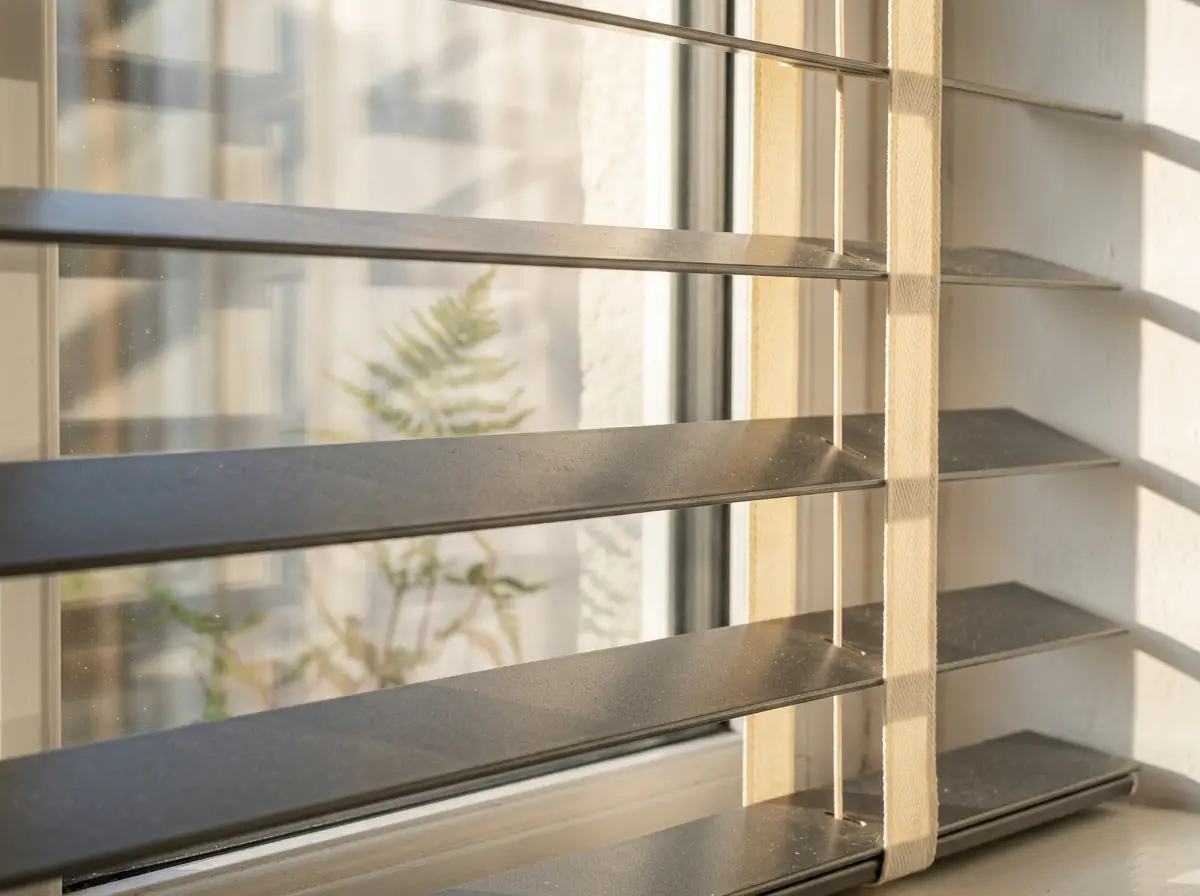
Macro view of iron-grey aluminium venetian slats and a candlelight-cream ladder tape on a Tokai windowsill, a garden fern just readable through the glass
Aluminium slats, tilted to catch the light between the trunks rather than block it outright.
No two rooms in a forest-edge Tokai home get the same light at the same hour — which is exactly why a phone quote never replaces a proper measure here.
The approach behind every free measure
Why here

Built for a suburb the forest genuinely shades

Tokai sits at the foot of the Constantiaberg, hemmed by the Tokai plantation — pine forest that has shaded this side of the southern suburbs since it was first planted as a commercial forestry block in the late 1800s. SANParks now manages the remaining stands as part of Table Mountain National Park, felling and replanting sections with indigenous fynbos as each pine rotation ends, but wide belts of mature pine still run along Tokai’s western and southern boundary. Most streets that back onto it are genuinely under canopy, not just near a park sign on a map.

That proximity cuts both ways indoors. A lounge or bedroom on the forest side of a Tokai property often reads dim and green-tinted well into the morning, while a gable end or street-facing room a few metres away gets the day’s full glare. It’s why we measure every window on a property individually rather than quoting one spec for the whole house.

Forest shade, not open sky Rooms backing onto the plantation get filtered, dappled light for much of the day; rooms on the street or mountain side get the full wash. The two sides of the same house often want opposite fabrics.
A damp, shaded microclimate Cape Town’s wet season plus the windbreak of mature pine means the shaded side of a forest-edge home dries out slower than a north-facing wall. We lean on powder-coated aluminium there, and save timber venetians for the sunnier rooms.
Pine debris, not salt The maintenance question here is needles, resin and pollen rather than sea air. Taut zip-screen mesh and easy-wipe exterior finishes hold up better against drifting pine debris than a loose weave.
Estate rules, checked before we quote A good number of Tokai and neighbouring properties sit inside a managed estate with guidelines on exterior colours and visible fittings. We check those before anything gets quoted for a street- or garden-facing wall.

One branch, uneven light — the reason every Tokai quote starts with a walk-through, not a phone call.

How it works

From enquiry to fitted, in four honest steps

No online measuring tools, no guesswork — every window gets a real consultant with a tape measure before a single fabric is cut.

01

Enquire

Chat, form or call — tell us the rooms, the product interest, and whether they face the forest or the street.

02

Free in-home measure

An expert consultant visits with samples, measures every opening precisely, and checks estate guidelines where they apply.

03

Written quote

Made-to-measure pricing per window, every option itemised — no surprises when the invoice arrives.

04

Made & fitted

Built to order, then fitted level, tested on the spot and worked through with you before the van goes.

And the money, said before the visit rather than after: shading a home on the forest edge works out at roughly R1,000 to R7,500 per square metre installed, according to the product and whether it is motorised. Small windows carry a minimum charge, and the number for each of yours comes out of the free measure in writing.

About this service

What this service is, plainly said

Tokai Blinds measures, makes and fits window and patio shading along this stretch of the Constantiaberg forest edge — Tokai itself, plus Constantia, Bergvliet, Meadowridge and Steenberg. Roller blinds, aluminium and timber venetians, cellular honeycomb blinds and folding-arm awnings are built to the sizes taken at your own openings, with hardware specified for the damp of a shaded wall as a matter of course rather than as an upgrade.

A job runs the same way each time. You send the form or use the chat, and one of our expert consultants will contact you shortly to arrange a free in-home measure. That visit reads which rooms in your house actually have a problem, measures every opening precisely, and settles fabric, slat and control room by room. A written quote follows with each window itemised, and nothing is manufactured until you have accepted it. Only then is it built, hung level, tested in front of you and demonstrated before the team goes.

The details you send us are used only to arrange that call-back, handled under POPIA.
Where we work

Tokai and the neighbouring southern suburbs

Based around Tokai, working the immediate ring of suburbs either side of the Constantiaberg.

Questions

Before you enquire

Does the forest side of the house really need a different blind?

Usually, yes. Windows backing onto the Tokai plantation get filtered, dappled light for much of the day, while a gable or street-facing window a few metres away can take the full afternoon sun. We spec fabric and openness per window rather than per house, which is one reason a proper measure matters more here than a phone estimate.

How do you deal with pine needles and resin on exterior products?

Taut zip-screen mesh sheds debris better than a loose weave, and we favour easy-wipe exterior finishes on awning fabric and hardware near the tree line. None of it is maintenance-free — we’ll be upfront about what an occasional clean-down near the canopy involves.

Are your roller shutters fire-rated or security shutters?

No, and we’d rather say that plainly than let anyone assume otherwise near a forest boundary. Our roller shutters are a shading product — sun, heat and glare control on the outside of the glass. They are not fire-rated or security-rated; that’s a different, specialist product, and we can point you toward it on request rather than sell you something that isn’t built for the job.

Do you check estate or body corporate rules before quoting?

Yes. A good number of Tokai and neighbouring properties sit inside a managed estate with guidelines on exterior colours and visible fittings. We check those at the free measure and flag anything that needs sign-off before we put a quote together.

Can blinds be made child- and pet-safe?

Yes. Chain and cord tensioners anchoring the loop taut to the wall are standard on our installs, cordless and wand-tilt options suit kids’ rooms and low windows a curious pet can reach, and motorisation removes cords and chains entirely.

How long does manufacturing and installation take?

Everything is made to order, so timing depends on the product and how much is on the order — your written quote will confirm the lead time for your specific job rather than a generic estimate.

Ready when you are

Let’s measure your Tokai windows properly.

Free in-home measure, a written per-window quote, and a spec that treats the forest side and the sunny side as two different jobs.

Get in touch

Tell us about your windows

Fill this in and one of our expert consultants will contact you shortly to arrange your free in-home measure.

1Free in-home measure — no cost, no obligation.
2Written quote, itemised per window.
3Made to order and professionally fitted.

POPIA notice: the details you share here are used only to arrange your free consultation call-back, and are never shared beyond that.

Tokai Blinds Usually replies in a few minutes