Products / Venetian blinds
Venetian blinds for light that shifts between the trunks
Horizontal slats that tilt to steer light — the most adjustable interior treatment there is, and the natural match for a forest-edge window where the light itself keeps moving.
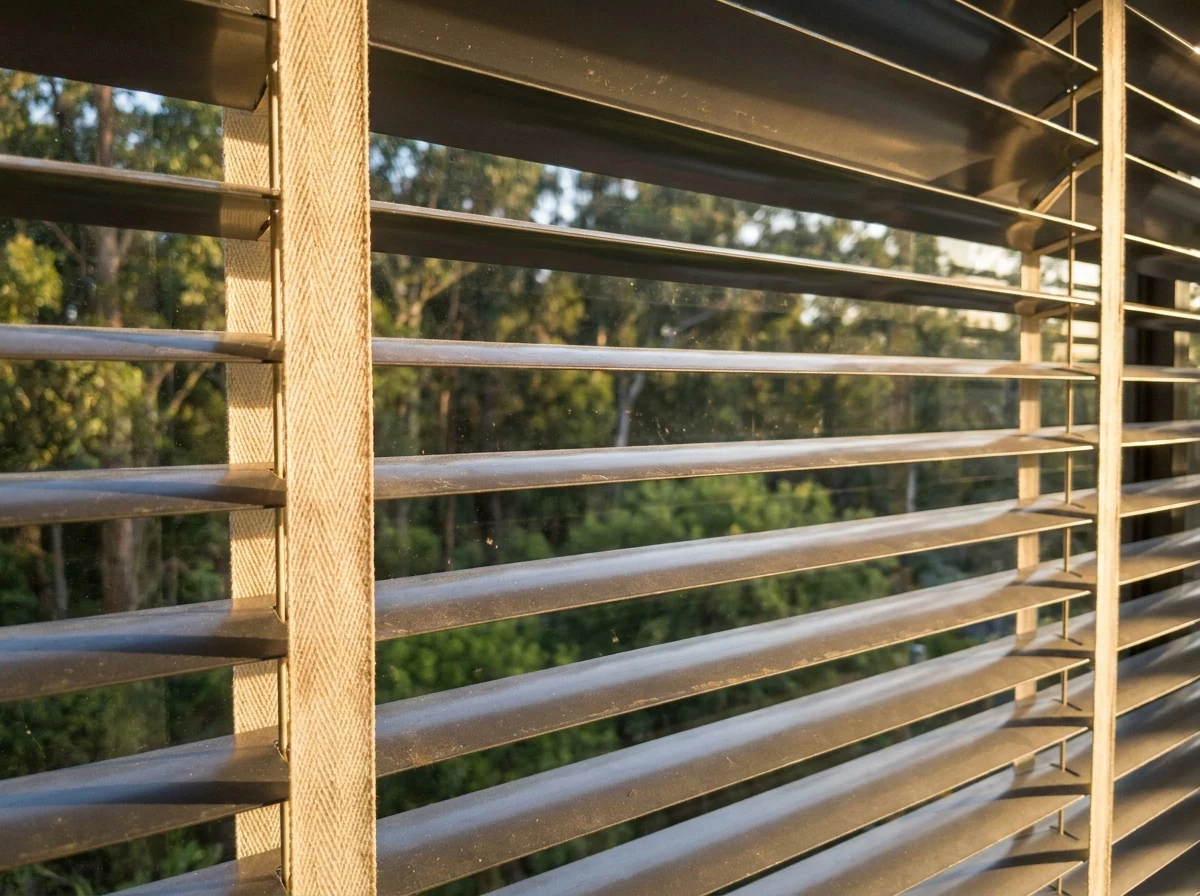
A roller blind is open or closed by degrees; a venetian steers light direction. That matters more in Tokai than in a suburb with a flat, open sky, because forest-edge light isn’t constant — it moves between the trunks through the morning and changes again once the sun clears the canopy in the afternoon. Tilting the slats lets a room track that shift instead of just going dark or bright.
Aluminium venetians
The moisture-tolerant choice: kitchens, bathrooms, laundries, and anywhere on the shaded, damp-prone side of a Tokai property where fabric struggles to fully dry between wet spells. Slats come in 25mm (crisp, most popular) or 50mm (bolder, fewer lines), in a wide colour range including woodlook finishes.
Timber & bamboo venetians
Warm, architectural, and a natural fit for Tokai’s older Cape-vernacular homes near the historic core. Best kept on the sunnier, drier side of the house rather than a permanently shaded forest-facing wall — quality lacquer handles normal humidity, but timber isn’t the pick for a room that never quite dries out.
External venetians
Mounted outside the glass, external venetians stop heat before it reaches the room at all — the strongest option for a gable or street-facing window that catches the day’s full sun without any forest shade to soften it.
What venetians cost
Guide figures, per square metre, installed, and the materials sit genuinely apart. Aluminium in 25 mm or 50 mm slat runs roughly R1,000 to R1,500 per square metre on a wand or cord, and roughly R2,500 to R3,600 per square metre with motorised tilt. Basswood and bamboo run roughly R1,600 to R2,600 per square metre manual and roughly R3,000 to R4,500 per square metre motorised. External venetians are a different order of spend again: roughly R3,000 to R4,500 per square metre manual and roughly R4,500 to R6,500 per square metre motorised with a wind sensor.
A narrow window carries a minimum charge, since headrail, brackets and fitting time hardly shrink with the opening. Use these to plan a budget rather than to expect a price: every window is measured, priced on its own and set out in writing before a slat is cut.
Aluminium venetians handle the damp side of the house well in Bergvliet and Meadowridge, timber suits the older farm-style homes around Constantia, and external venetians work hard on the big glazed facades common to Steenberg’s estate builds.
Let’s measure your windows properly.
Free in-home measure, a written per-window quote, and an honest read on aluminium versus timber for your rooms.